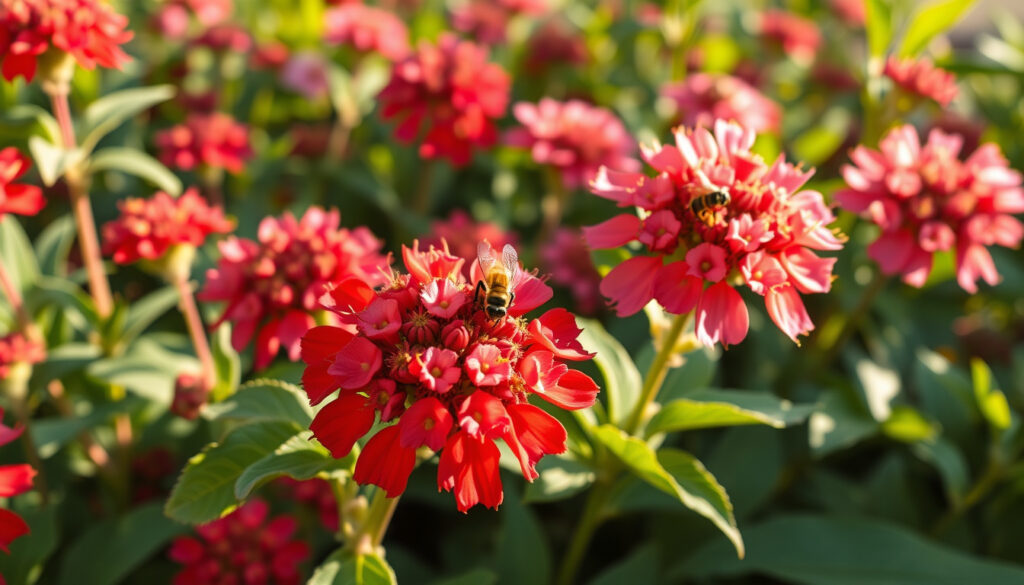
Bee Balm Growing Guide: Care, Varieties, and UK Tips
Anyone who’s watched a bee hover around a bright red, ragged flower in a midsummer border has probably already met bee balm without knowing its name. This North American native, also called Monarda or bergamot, isn’t just a pollinator powerhouse — it’s a perennial that asks for a little management in return for months of colour and a surprisingly good cup of tea. This guide lays out where to plant it, what can go wrong, and how UK gardeners in particular can get the best from this vigorous mint-family member.
Lifecycle: Perennial (returns each year) ·
Height: 0.6–1.2 m (2–4 ft) ·
Bloom time: Mid- to late summer ·
Flower colors: Red, pink, purple, white, blue ·
Hardiness zones: USDA 3–9 ·
Sun requirement: Full sun to partial shade
Quick snapshot
- Perennial that returns each year in zones 3–9 (Royal Horticultural Society (RHS) plant guide)
- Thrives in full sun with moist, well-drained soil (Iowa State University Extension (horticultural authority))
- Blooms mid- to late summer with a 4–6 week flowering window (Royal Horticultural Society (RHS) plant guide)
- Exact spread rate varies by variety and local soil conditions (Garden Design (ornamental perennials coverage))
- Effectiveness of milk sprays for mildew control remains anecdotal (Sunday Gardener (UK gardening advice))
- Maximum winter hardiness in containers versus ground is not well documented for UK zone 8–9 conditions (DutchGrown UK (specialist bulb and plant supplier))
- Dies back to ground each winter; cut back from mid-spring onward (High Country Gardens (perennial specialists))
- Divide clumps every 2–4 years to keep plants vigorous (High Country Gardens (perennial specialists))
Where is the best place to plant bee balm?
Sunlight and soil requirements for bee balm
Bee balm performs best in a sunny spot that gets at least six hours of direct sun each day, though it tolerates partial shade. The soil needs to be moist, well-drained and rich in organic matter — think a humus-rich loam rather than heavy clay. According to the Royal Horticultural Society (UK’s leading horticultural charity), well-drained soil is non-negotiable. Avoid planting in waterlogged areas because wet feet encourage root rot and the dreaded powdery mildew.
If your garden sits on clay, improve drainage by mixing in grit or well-rotted compost before planting. A raised bed also works well. The trade-off: richer soil means more vigorous growth — and more spreading to keep in check.
Spacing and companion planting considerations
- Allow 45–60 cm (18–24 in) between plants for air circulation to reduce mildew risk (DutchGrown UK (specialist bulb and plant supplier)).
- Taller varieties will need staking because monardas grow from shallow rhizomes (The English Garden (UK gardening publication)).
- Good companions include echinacea, rudbeckia, and phlox — plants that share similar sun and moisture needs without competing aggressively.
More organic matter in the soil means lusher growth — but also faster rhizome spread. UK gardeners with small borders should plan to divide every two years, not three.
The implication: choosing the right site from the start reduces the main headache — mildew — more than any cure later can.
What are the cons of bee balm?
Powdery mildew susceptibility
Powdery mildew is the main headache. It shows up as a white, powdery coating on leaves, especially in humid conditions or when air flow is poor. The Iowa State University Extension (reliable US horticultural advisory) recommends selecting mildew-resistant cultivars as the first line of defence. Dry conditions at the roots also make the plant more prone, so consistent moisture matters (Sunday Gardener (UK gardening advice)).
Aggressive spreading habit
Bee balm spreads via underground rhizomes and can become invasive in loose, fertile soil. Gardeners who plant it in a mixed border without a barrier often find it overtaking neighbours by the second season. Division every 2–4 years is the standard fix, as advised by Garden Design (ornamental perennials coverage) and High Country Gardens (perennial specialists).
Short-lived blooms on individual stems
Each individual flower lasts only a few days, but the plant blooms for weeks overall because new stems keep producing. Regular deadheading encourages a longer flowering period, according to Sunday Gardener (UK gardening advice).
A Chelsea chop in May — cutting stems back by about a third — makes Monarda more compact and delays flowering, which can help avoid the worst of summer humidity and reduce mildew pressure (Sunday Gardener (UK gardening advice)).
Should bee balm be planted in pots or ground?
Growing bee balm in containers: pros and cons
- Pots limit rhizome spread, making it easy to control invasiveness — the single biggest reason to choose containers.
- Potted bee balm requires more frequent watering and fertilisation than ground-planted specimens (DutchGrown UK (specialist bulb and plant supplier)).
- Use a pot at least 30 cm (12 in) deep with drainage holes — shallow containers dry out too fast.
- Winter hardiness is reduced in pots; move containers to a sheltered spot or wrap them in colder regions.
Ground planting for naturalised gardens
- Ground planting allows fuller growth and better winter hardiness because the roots are insulated by soil.
- Can spread aggressively — install a rhizome barrier if planting in a mixed border.
- Division every 2–4 years keeps the clump healthy and prevents the centre from dying out (High Country Gardens (perennial specialists)).
Six varieties, one pattern: mildew resistance varies dramatically, and the best choice depends on your space and aesthetic. The table below pulls together the most reliable options from the Iowa State University Extension (horticultural authority).
| Variety | Flower colour | Height | Mildew resistance |
|---|---|---|---|
| Marshall’s Delight | Bright pink | 90–120 cm (36–48 in) | High |
| Gardenview Scarlet | Scarlet red | 75–90 cm (30–36 in) | High |
| Violet Queen | Violet blue | 75–90 cm (30–36 in) | High |
| Petite Wonder | Pink | 25–30 cm (10–12 in) | Moderate |
| Pardon My Purple | Purple | 25–30 cm (10–12 in) | Moderate |
| Petite Delight | Rose pink | 30–38 cm (12–15 in) | Moderate |
The pattern: taller varieties from the ‘Marshall’s Delight’ and ‘Gardenview Scarlet’ line offer the best mildew resistance, while dwarf cultivars like ‘Pardon My Purple’ trade some resilience for compact form. For a UK border that faces humidity, the taller resisters are the safer bet.
UK summers are wetter than much of the US, so mildew resistance isn’t a nice-to-have — it’s the difference between a showstopper plant and a fungal mess by August (The English Garden (UK gardening publication)).
Does bee balm come back each year?
Lifecycle of bee balm
Yes, bee balm is a hardy perennial that returns year after year in zones 3–9, which covers the entire UK. The plant dies back to ground level each winter, as noted by High Country Gardens (perennial specialists). New growth emerges from the root system in mid-spring.
Winter care for perennial bee balm
- Cut stems back to ground level in late autumn or early spring — either works.
- Mulch around the crown in colder regions (USDA zone 3–5) for winter protection; UK zone 8–9 rarely needs extra insulation.
- For potted plants, move containers against a house wall or into an unheated greenhouse to reduce freeze-thaw cycles.
Can you grow bee balm in the UK?
Climate suitability for UK gardens
Bee balm is fully hardy in the UK and grows well in most regions, according to the Royal Horticultural Society (UK’s leading horticultural charity). Choose a sunny, sheltered spot with well-drained soil. The main difference from North American advice: UK gardeners need to be more vigilant about powdery mildew because of higher humidity, especially in the west and south-west.
Popular UK varieties: Bee Happy and others
- ‘Bee Happy’ is a compact, mildew-resistant variety well suited to container growing.
- ‘Cambridge Scarlet’ (M. didyma) remains a classic UK favourite with vivid red blooms.
- UK suppliers like DutchGrown UK (specialist bulb and plant supplier) and IrishPlantsDirect offer Monarda seeds and plants.
“Many monardas originate from the American prairies and prefer moist to dry conditions, while M. didyma prefers moist conditions.”
— The English Garden (UK gardening publication)
“Regular deadheading encourages a longer flowering period.”
— Sunday Gardener (UK gardening advice)
How to grow bee balm: step-by-step guide
Growing bee balm from seed or from nursery plants follows a straightforward path. The steps below draw on advice from the Royal Horticultural Society (UK’s leading horticultural charity) and DutchGrown UK (specialist bulb and plant supplier).
- Choose your site. Full sun with at least 6 hours of direct light. Partial shade is okay but reduces flowering.
- Prepare the soil. Dig in well-rotted compost or manure. If your soil is heavy clay, add grit or create a raised bed.
- Plant at the right depth. Dig a hole twice the width of the root ball, set the crown at soil level, and water in well.
- Space generously. 45–60 cm (18–24 in) apart for air circulation.
- Water consistently. Keep the soil moist but not waterlogged. Dry spells at the roots trigger mildew.
- Deadhead regularly. Remove spent flowers to extend the bloom period into early autumn.
- Divide every 2–4 years. Lift and split the clump in early spring or autumn. Replant the healthiest outer sections and discard the woody centre.
- Consider a Chelsea chop. In late May, cut stems back by one-third to delay flowering and reduce mildew risk (Sunday Gardener (UK gardening advice)).
Upsides
- Reliable perennial that returns each year
- Powerful pollinator attractor (bees, hummingbirds, butterflies)
- Edible leaves with a citrus-bergamot flavour for tea
- Wide range of colours and heights available
- Easy to propagate by division
Downsides
- Prone to powdery mildew in humid conditions
- Vigorous spreading via rhizomes — can become invasive
- Taller varieties need staking
- Individual flowers last only a few days
- Requires division every 2–4 years to stay healthy
Related reading: Blood Pressure: Normal Ranges, Symptoms, and Lowering Tips
Those interested in a North American perspective on bee balm cultivation can consult a Canadian bee balm guide, which covers similar ground with a focus on Canadian conditions.
Frequently asked questions
What is bee balm?
Bee balm, also called Monarda or bergamot, is a genus of perennial flowering plants in the mint family (Lamiaceae). It is native to North America and produces distinctive, shaggy flower heads in shades of red, pink, purple, white and blue. The leaves have a citrus-bergamot fragrance and are used for herbal tea (Wikipedia (botanical reference)).
How often should I water bee balm?
Water deeply once or twice a week during dry spells, keeping the soil consistently moist but not waterlogged. Consistent moisture at the roots helps prevent powdery mildew, which is triggered by drought stress (Sunday Gardener (UK gardening advice)).
How do I prune bee balm for more blooms?
Deadhead spent flowers regularly to encourage new blooms. In late May, a ‘Chelsea chop’ — cutting stems back by about one-third — can delay flowering into September and promote a bushier, more compact plant (Sunday Gardener (UK gardening advice)).
Can bee balm be used in cooking?
Yes. The leaves have a citrus-bergamot flavour and are used fresh or dried in herbal teas, salads and as a garnish. Scarlet monarda (M. didyma) has a slightly sweeter, more citrus taste than other species (Mother Earth News (organic gardening publication)).
How to propagate bee balm from cuttings?
Take 10–15 cm stem cuttings in early summer, remove the lower leaves, dip in rooting hormone, and place in moist potting mix. Keep the cuttings humid with a plastic bag or propagator. Rooting typically takes 2–3 weeks.
Does bee balm need deadheading?
Yes. Regular deadheading — removing faded flowers — encourages a longer flowering period and prevents the plant from putting energy into seed production. Use clean secateurs and cut back to just above a leaf node (Sunday Gardener (UK gardening advice)).
What pests attack bee balm?
The main pest is powdery mildew (a fungal disease, not an insect). In dry summers, spider mites may appear as tiny specks on the undersides of leaves, causing stippled discolouration. Slugs and snails can damage young shoots in spring. Good air circulation and healthy soil are the best defences (Royal Horticultural Society (UK’s leading horticultural charity)).
For the UK gardener weighing whether to plant bee balm in a pot or in the ground, the choice is simple: if you want maximum pollinator impact and have space to let it roam, go ground-planted with a mildew-resistant variety. If your garden is small or you prefer tidy control, a 30 cm pot keeps the spread in check — just be ready to water more often. Either way, the bees will find it.
More related posts
 Harvey Levin: Biography, Partner, Net Worth, and Career
 Salish Matter: Age, Net Worth, and What Happened to Her Arm
 Mikki Mase: $32M Net Worth, Casino Bans & Strategy Explained
 Suzanne Clément Biography, Movies & Personal Life
 Chair Exercises for Seniors – Safe Ways to Build Strength and Balance
 Toronto to Dubai Flight: Duration, Direct Options & Safety
 What Words Can You Make With? Unscramble Guide
 El Mencho: Mexico’s Most Wanted Cartel Leader Killed in 2026