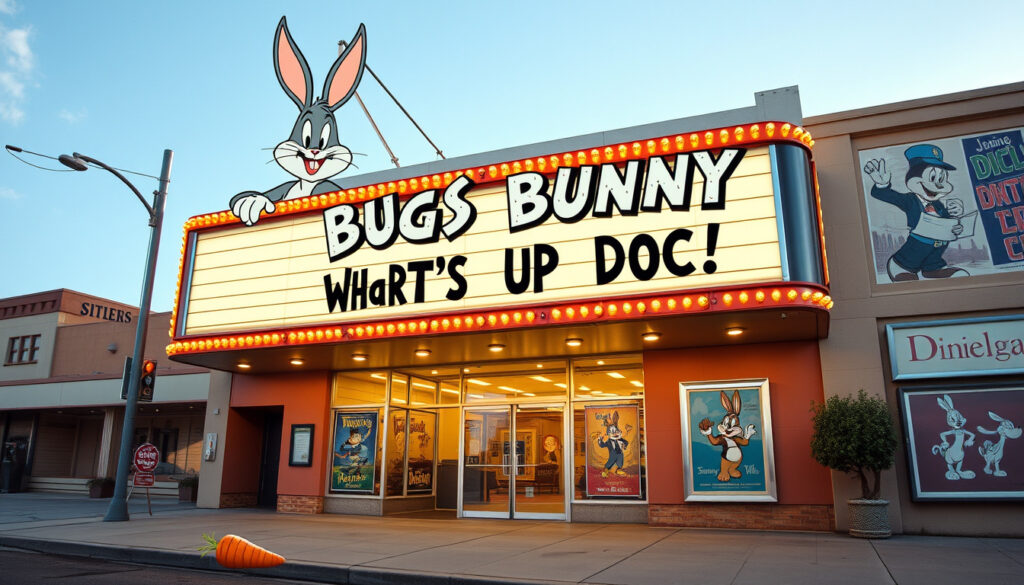
Bugs Bunny: History, Catchphrase, and Cultural Legacy
Few cartoon characters have burrowed into pop culture quite like Bugs Bunny. From his first “What’s up, doc?” to a linguistic twist that turned a biblical name into a playground insult, his story is as layered as it is funny.
First appearance: 1940 (Porky’s Hare Hunt) · Number of shorts: Over 175 · Academy Award win: 1958 (Knighty Knight Bugs) · Catchphrase: “What’s up, doc?” · Voice actor (original): Mel Blanc
Quick snapshot
- Created by Tex Avery (Encyclopaedia Britannica)
- First appearance: 1940 (Encyclopaedia Britannica) (Encyclopaedia Britannica)
- Catchphrase “What’s up, doc?” first used in 1941’s A Wild Hare (Looney Tunes Wiki) (Encyclopaedia Britannica)
- Won Academy Award in 1958 for Knighty Knight Bugs (Encyclopaedia Britannica) (Encyclopaedia Britannica)
- Official LGBTQ classification – Warner Bros. has not made a statement
- Whether the “nimrod” insult was deliberately chosen for its ironic meaning
- Exact year of catchphrase first use – debated between 1940 and 1941
- 1940: First appearance in Porky’s Hare Hunt (Encyclopaedia Britannica)
- 1941: First “What’s up, doc?” in A Wild Hare (Looney Tunes Wiki)
- 1957: What’s Opera, Doc? premieres (Looney Tunes Wiki)
- 1958: Wins Academy Award (Looney Tunes Wiki)
- Continuing appearances in Warner Bros. projects
- Potential new linguistic studies on “nimrod” evolution
- Legacy as one of animation’s most studied characters
Bugs Bunny isn’t just a cartoon star — he’s a case study in how a single catchphrase and a misattributed insult can permanently shift language. For fans, that means every viewing of What’s Opera, Doc? carries a hidden linguistic footnote.
The following table outlines Bugs Bunny’s key attributes.
| Attribute | Value |
|---|---|
| First appearance | 1940 (Porky’s Hare Hunt) |
| Number of shorts | >175 |
| Academy Award | 1958, Best Animated Short |
| Catchphrase | “What’s up, doc?” |
| Voice actor | Mel Blanc (original) |
| Creator | Tex Avery |
Is Bugs Bunny LGBTQ?
What is the evidence for Bugs Bunny’s gender identity?
- Bugs frequently dressed as a female character to trick opponents, such as in Bugs Bunny Rides Again (1948) and What’s Opera, Doc? (1957) (Encyclopaedia Britannica)
- These cross-dressing gags have led fans and critics to consider Bugs a drag icon, though Warner Bros. has never officially classified the character as LGBTQ
How did Bugs Bunny’s cross-dressing impact perceptions?
- Scholars note that Bugs’ gender play challenged 1940s norms, but the intent was comedic trickery, not identity exploration (Dot & Line (culture analysis))
- The ambiguity has kept the character open to queer readings, especially among modern audiences
The implication: Bugs Bunny’s cross-dressing was a tactical gag, not an identity statement — but its legacy helped open doors for queer interpretation in animation.
Why is Bugs Bunny so famous?
What made Bugs Bunny stand out among cartoon characters?
- Bugs starred in over 175 animated shorts, more than any other Warner Bros. character (Encyclopaedia Britannica)
- His signature “What’s up, doc?” became instantly recognizable
- He won an Academy Award in 1958 for Knighty Knight Bugs
How did Bugs Bunny become a cultural icon?
- He earned a star on the Hollywood Walk of Fame in 1985
- His sardonic, outsmart-the-hunter persona resonated with Depression-era and postwar audiences (Encyclopaedia Britannica)
- Appearances in Space Jam (1996) and Space Jam: A New Legacy (2021) introduced him to new generations
This combination of quantity, quality, and attitude explains his enduring popularity.
What’s Bugs Bunny’s famous line?
What is the origin of “What’s up, doc?”?
- The catchphrase first appeared in A Wild Hare (1940), written by director Tex Avery (Looney Tunes Wiki)
- Avery later explained it was a common expression in his native Texas (Reddit fan discussion)
How did Bugs Bunny’s catchphrase evolve?
- “What’s up, doc?” became Bugs’ default greeting, often accompanied by a carrot chew
- It entered global lexicon as a casual, slightly ironic salutation
- The phrase has been referenced in hundreds of TV shows, films, and ads
Why this matters: A throwaway line from a Texas director became one of the most quoted phrases in pop culture — proof that the right words, delivered with a carrot, can stick forever.
Why is he called Bugs Bunny?
Who created the name Bugs Bunny?
- Animator Bob Givens is credited with naming the character; an early sketch was labeled “Bugs’s Bunny” after animator Ben “Bugs” Hardaway (Encyclopaedia Britannica)
- Before that, the character was known as “Happy Rabbit”
What did “Bugs” mean in slang?
- In 1940s slang, “bugs” meant “crazy” or “goofy” – fitting a rabbit who always outwits his pursuers
- His full name is simply Bugs Bunny; no middle name
The name “Bugs” was never meant to imply insects — it was a nickname for a slightly unhinged personality. That misperception still confuses newcomers today.
The name ‘Bugs’ thus carries a layer of irony: it suggests craziness, but the character is actually the cleverest one in the room.
What insult did Bugs Bunny make?
What is the story behind Bugs calling Elmer Fudd “nimrod”?
- Many fans believe Bugs called Elmer a “nimrod” in What’s Opera, Doc? (1957)
- However, linguistic research shows that the first Looney Tunes “nimrod” insult was spoken by Daffy Duck in What Makes Daffy Duck (1948), directed by Robert McKimson (Wordorigins.org (etymology research))
- The short Rabbit Every Monday (1951) also uses “little Nimrod” to refer to Yosemite Sam (Wordorigins.org)
How did “nimrod” change meaning because of Bugs Bunny?
- The biblical Nimrod was “a mighty hunter before the Lord” (Genesis 10:8–9) (Dot & Line)
- Children watching the cartoons missed the biblical reference and absorbed the insult through tone and context (Dot & Line)
- By the 1970s, “nimrod” had become a synonym for “fool” in North American English, a shift in which Looney Tunes played a key role (Wordorigins.org)
The common belief that Bugs said “nimrod” in What’s Opera, Doc? is itself part of the word’s story. Whether Bugs or Daffy said it first, the cartoon universe collectively repurposed a biblical term into a schoolyard insult.
The story of ‘nimrod’ illustrates how cartoons can silently reshape language without anyone noticing.
Eight specifications that define Bugs Bunny as a character:
| Specification | Detail |
|---|---|
| Full name | Bugs Bunny (no middle name) |
| Species | Rabbit |
| Gender | Male (with frequent cross-dressing) |
| First appearance | Porky’s Hare Hunt (1940) |
| Creator | Tex Avery |
| Voice actor (original) | Mel Blanc |
| Catchphrase | “What’s up, doc?” |
| Awards | Academy Award (1958), Hollywood Walk of Fame (1985) |
Confirmed facts
- Bugs Bunny cross-dressed in many shorts to trick opponents
- The “nimrod” insult originated in a Looney Tunes short (1948, Daffy Duck)
- Catchphrase “What’s up, doc?” first appeared in 1941
- Won Academy Award in 1958
What’s unclear
- Official LGBTQ status – Warner Bros. has not made a statement
- Whether the “nimrod” insult was deliberately chosen for its ironic reversal
- Exact number of shorts (estimates range from 175 to 180+ depending on inclusion criteria)
- Whether the catchphrase “What’s up, doc?” first appeared in 1940 or 1941 – conflicting sources
Expert perspectives
“He’s not a hero; he’s a survivor.”
Chuck Jones, director of many Bugs Bunny shorts (Encyclopaedia Britannica)
“I just did the voice that came naturally.”
Mel Blanc, original voice actor for Bugs Bunny (Encyclopaedia Britannica)
“The Looney Tunes usage undoubtedly helped popularize the insulting sense of ‘nimrod,’ even if it was not the sole origin.”
Ben Zimmer, linguist and word columnist, as cited in Wordorigins.org (etymology research site)
These insights from creators and linguists confirm that Bugs Bunny’s impact extends far beyond entertainment.
For anyone who has ever casually called someone a nimrod, the story behind that word is a reminder that cartoons can quietly rewrite language. The next time Bugs Bunny says “What’s up, doc?”, it’s worth remembering: that rabbit didn’t just make us laugh — he made us speak differently.
unrememberedhistory.com, simonsaysai.com, reddit.com, facebook.com, youtube.com, irvoslin.wordpress.com, instagram.com, reddit.com
For a deeper look at the controversies surrounding the character, see Bugs Bunnys cultural impact.
Frequently asked questions
Is Daffy Duck LGBTQ?
There is no official statement from Warner Bros. regarding Daffy Duck’s sexual orientation. Like Bugs, Daffy occasionally cross-dressed for comedic effect, but the studio has never classified either character as LGBTQ.
What is the Big 3 of cartoons?
The “Big 3” typically refers to Bugs Bunny, Mickey Mouse, and Homer Simpson, representing the most recognizable animated characters from Warner Bros., Disney, and Fox respectively.
Who is Bugs Bunny’s girlfriend?
Bugs Bunny’s love interest is Lola Bunny, introduced in Space Jam (1996). She later appeared in Space Jam: A New Legacy (2021) and in the Looney Tunes series The Looney Tunes Show.
Did Bugs Bunny appear in Space Jam?
Yes, Bugs Bunny was the main lead in Space Jam (1996) alongside Michael Jordan, and returned in Space Jam: A New Legacy (2021) with LeBron James.
Is Bugs Bunny in Fortnite?
Yes, Bugs Bunny was added as a playable skin in Fortnite in 2021 during the “Bundy” update, part of a crossover with Warner Bros.
Who voiced Bugs Bunny?
The original and most famous voice actor was Mel Blanc, who voiced Bugs from 1940 until his death in 1989. Later voice actors include Jeff Bergman, Joe Alaskey, and Eric Bauza.
What is Bugs Bunny’s first appearance?
Bugs Bunny’s first official appearance was in Porky’s Hare Hunt on April 30, 1940, though his design and personality evolved over subsequent shorts.
More related posts
 Gaten Matarazzo Movies and TV Shows: Complete Filmography
 Qualicum Beach Real Estate: Homes for Sale & MLS Guide
 20 Degrees C to F: 68°F Room Temperature Conversion Guide
 David Laid: Biography, Age, Diagnosis, and Natural Status
 Nicola Peltz: Net Worth, Feud, Dating History, and Family Wealth
 Mahima Chaudhry: Biography, Husband, Daughter & Accident
 Emmylou Harris: Biography, Hits, Health, and Personal Life
 پخش زنده شبکه ۳ – Direct HD Links, Schedule and Viewing Guide