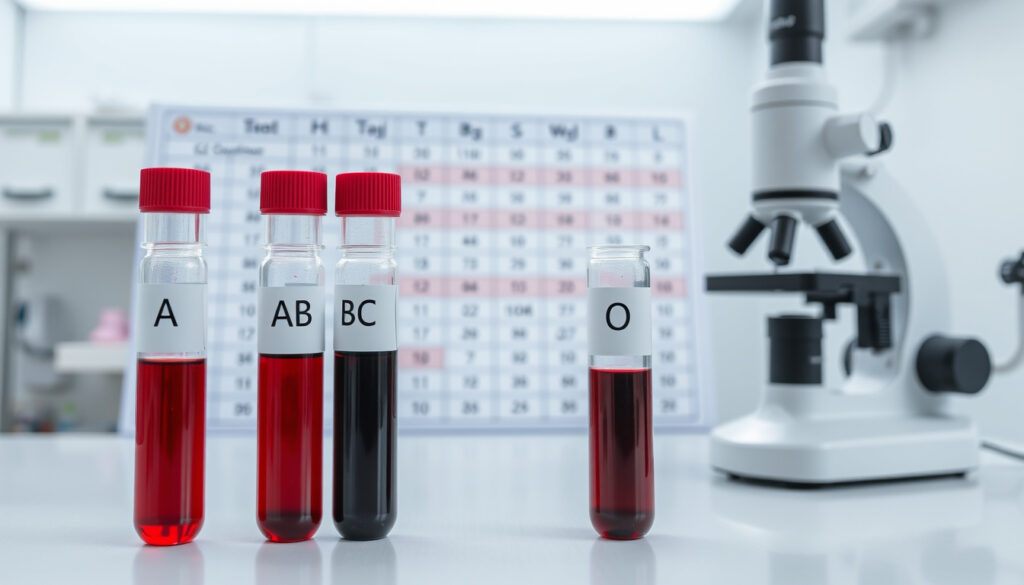
Blood Type: Rarest, Most Common, and Compatibility Explained
Anyone who’s ever given blood knows the little card that comes back with a letter and a plus or minus. In an emergency, that two-character code can mean the difference between life and death, and your blood type also carries clues about human migration patterns, especially in Ireland where O-positive makes up 47% of the population, according to the Irish Blood Transfusion Service, Ireland’s national blood service.
Rarest blood type worldwide: AB-negative (approx. 1% of population) · Most common blood type in the US: O-positive (about 38% of people) · Universal donor: O-negative (can be given to any patient) · Universal recipient: AB-positive (can receive from any type) · Blood types in Ireland – most common: O-positive (55% of donors)
Quick snapshot
- AB-negative is the rarest blood type in most populations (Irish Blood Transfusion Service)
- O-positive is the most common blood type globally and in Ireland (Irish Blood Transfusion Service)
- O-negative is the universal donor (Northern Ireland Blood Transfusion Service)
- Ireland has a high prevalence of O blood type (Irish Blood Transfusion Service)
- Precise ranking of the 3 rarest blood types varies by ethnicity
- “Better” between O+ and AB+ depends on individual context
- Exact percentage of O-positive in Ireland differs by donor pool (47% population vs 55% donors)
- How blood type distribution correlates with historical settlement patterns in Ireland
- ABO blood group system discovered in 1901 – remains the standard classification (Irish Blood Transfusion Service)
- Research continues into rare blood type identification and donor matching for underserved populations
From the 8 major blood types, one pattern: O-negative stands alone as the universal donor while AB-positive can receive from any group.
| Label | Value |
|---|---|
| Number of main blood types | 8 (A+, A-, B+, B-, AB+, AB-, O+, O-) |
| Most common type globally | O+ |
| Rarest type globally | AB- |
| Universal donor | O- |
| Universal recipient | AB+ |
Which blood type is rarest?
What are the 3 rarest blood types worldwide?
- AB-negative is typically the rarest, found in about 0.6–1% of donors (Irish Blood Transfusion Service).
- B-negative and A-negative round out the top three, though order varies by region (2021 study in PMC / NIH).
- In Ireland, AB-negative is the rarest at 1% of the population (Irish Blood Transfusion Service).
Is AB negative really the rarest?
Yes, across most ethnic groups AB-negative has the lowest frequency. However, the precise ranking of the three rarest types shifts depending on the population studied. For example, B-negative is less common than A-negative in Europe but may flip in other regions.
AB-negative is consistently the rarest, but a donor in Dublin and a donor in Shanghai won’t share the same second- or third-rarest group.
The pattern is clear: rarity is relative to population.
Which is better, O+ or AB+?
Why is O+ blood so special?
- O+ is the most common type (38% of US donors, 47% in Ireland) and can be donated to any Rh-positive recipient (Irish Blood Transfusion Service).
- It is the single most requested blood type by hospitals because of its high compatibility (Australian Red Cross Lifeblood).
Can AB+ receive from anyone?
Yes, AB+ is the universal recipient. The Irish Blood Transfusion Service states that AB+ can receive blood from all major blood type groups. However, AB+ can only donate to other AB+ individuals.
Which is “better” depends on perspective: if you want to help the most people, O+ delivers more flexibility for positive-type patients; if you need to ensure you can always receive blood, AB+ gives the widest safety net.
Here’s a quick comparison of the two types:
Two donors, two trade-offs: O+ gives to many but receives only O+; AB+ receives from all but gives to few.
| Characteristic | O+ | AB+ |
|---|---|---|
| Can donate to | A+, B+, AB+, O+ (all Rh+) | AB+ only |
| Can receive from | O+ and O- | All types (A, B, AB, O; Rh+ and Rh-) |
| Prevalence in Ireland | 47% | 3% (all AB types combined) |
| Best use case | High-demand donor for positive recipients | Safe recipient in emergencies |
The choice between the two depends on whether you prioritize giving or receiving.
What blood type is most Irish?
Why is Irish DNA so unique?
- O-positive is the most common blood type in Ireland at 55% of donors, according to the Irish Blood Transfusion Service.
- Ireland has one of the highest O frequencies globally. A 2021 study reported an O phenotype frequency of 54.95% among modern Irish donors (PMC / NIH).
- The Nature study found strong similarity in O gene frequencies between western Ireland and Iceland, suggesting shared ancestral migration routes.
What race is mostly B+?
B+ is more common in Asian populations. In some Chinese regions, B+ frequency reaches up to 30% (PMC / NIH). The same study shows B frequency in Ireland is about 12%, much lower than in East Asia.
If you’re an Irish donor, your O+ blood is in high demand locally. If you have B+ ancestry from Asia, your type may be underrepresented in Western blood banks.
These patterns hint at deep ancestral roots reflected in modern blood banks.
What two blood types don’t mix?
Which blood types are incompatible?
- Type A and Type B are incompatible because A plasma contains anti-B antibodies that attack B red cells, and vice versa (Canadian Blood Services).
- Rh incompatibility occurs when Rh-negative blood is given to an Rh-positive patient; the immune system can react.
- The Northern Ireland Blood Transfusion Service explains that donor red cells must be ABO-compatible with the recipient’s group.
Why can’t Type A blood be given to Type B?
Because Type B recipients have anti-A antibodies. Transfusing A blood into a B patient triggers a severe immune reaction. The universal rule: O can be given to any, A can give to A and AB, B can give to B and AB, and AB can only give to AB.
Even a single mismatched transfusion can cause haemolysis. That’s why hospitals always double-check blood type before any procedure.
This underscores why blood matching is a non-negotiable safety step.
Why is O negative better than O positive?
What makes O-negative the universal donor?
- O-negative lacks A, B, and Rh antigens, making it safe for all recipients (Northern Ireland Blood Transfusion Service).
- The Canadian Blood Services notes that O-negative is the only type that can be given in emergencies when the patient’s blood group is unknown.
When would a patient require O-negative?
Neonates, trauma patients, and anyone with an unknown blood type rely on O-negative. O-positive, by contrast, can only be given to Rh-positive patients. The Australian Red Cross Lifeblood describes O-negative as the “universal emergency red cell donor.”
Each type serves a distinct role in transfusion medicine.
What we know and what remains unclear
Confirmed facts
- AB-negative is the rarest blood type in most populations (Irish Blood Transfusion Service).
- O-positive is the most common blood type globally (Irish Blood Transfusion Service).
- O-negative is the universal donor (Northern Ireland Blood Transfusion Service).
- Ireland has a high prevalence of O blood type (Irish Blood Transfusion Service).
What’s unclear
- Precise ranking of the 3 rarest blood types varies by ethnicity.
- “Better” between O+ and AB+ depends on individual context.
O positive is the most common blood group in Ireland, accounting for 47% of the population.
— Irish Blood Transfusion Service, Ireland’s national blood service
O-negative blood can be given to any patient in an emergency when the blood type is unknown.
— Canadian Blood Services, Canada’s national blood authority
AB positive patients can receive red cells of any group as universal recipients.
— Northern Ireland Blood Transfusion Service
Blood type is more than a letter—it’s a snapshot of human history and a practical tool for saving lives. For the 41% of Irish adults with high blood pressure, knowing your type could be as important as monitoring your numbers. Whether you’re O-negative (rare, precious, universal) or AB-positive (rare, versatile, safe), the system works because donors and recipients are matched with precision. For an Irish donor, the choice is clear: give O+ to help the majority, or give O-negative to save anyone.
Related reading: Blood Pressure: Normal Ranges, Symptoms, and Lowering Tips · Life Insurance Ireland: Types, Costs & Best Options
irishexaminer.com, en.wikipedia.org, giveblood.ie, giveblood.ie, thehealthlab.ie, irishtimes.com
For a detailed breakdown of blood type compatibility, check out this detailed breakdown of blood type compatibility guide that explores rarity and transfusion rules in depth.
Frequently asked questions
What is the difference between blood type and Rh factor?
Blood type refers to the ABO group (A, B, AB, O), while Rh factor indicates the presence (+) or absence (-) of the Rh D antigen. Together they define the eight main blood types.
Can blood type change over time?
In very rare cases, changes occur after bone marrow transplants or certain diseases, but generally blood type is fixed for life.
How is blood type inherited?
You inherit one ABO allele from each parent. A and B are codominant, O is recessive. Rh inheritance is independent and dominant.
Why is O-negative blood so important in emergencies?
It lacks A, B, and Rh antigens, so it can be transfused immediately without waiting to match the patient’s type.
Do different ethnicities have different blood type distributions?
Yes. For example, O-positive is common in Europe and Africa; B-positive is more frequent in Asia; AB-negative is rare everywhere.
What is the most common blood type in Asia?
B-positive is common, and O-positive still leads overall. In some Chinese regions, B+ reaches 30%.
Can someone with type A blood donate to type AB?
Yes, type A can donate to AB because AB recipients have no anti-A antibodies.
What is the universal donor for plasma?
AB-positive is the universal plasma donor, the opposite of red cell donation.
More related posts
 Best Books to Read This Year: Top Must-Reads and Bestsellers
 Amal Clooney: Biography, Career, Net Worth, and Family Life
 So You Think You Can Dance: Cancelled? Season 19 Status
 Azul Beach Resort Negril – Reviews and Adults-Only Guide
 FBI Most Wanted Ryan Wedding – From Olympic Snowboarder to Cartel Leader
 Gaten Matarazzo Movies and TV Shows: Complete Filmography
 Kurt Cobain’s Final Days: Cause, Timeline & Unanswered Questions
 Print Shop Near Me: Where to Print Documents, Photos & More