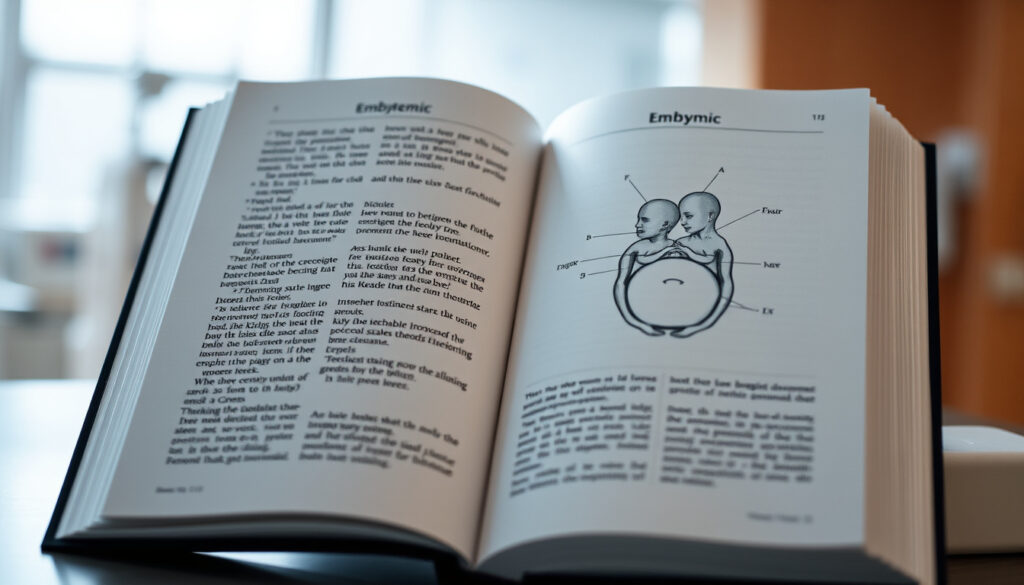
Conjoined Twins: Types, Causes, Daily Life, and Separation
What must it be like to share a body with your twin from the very first breath? Conjoined twins are a rare condition where identical twins are physically connected at birth, occurring in about 1 in 50,000 to 200,000 births (Cleveland Clinic (health system)).
Estimated occurrence: 1 in 50,000 to 200,000 births ·
Survival rate to birth: Approximately 40–60% ·
Female predominance: About 70–75% of conjoined twins are female ·
Most common type: Thoracopagus (joined at chest) ·
Separation success rate: Varies widely; many cases result in at least one survivor
Quick snapshot
- Conjoined twins are identical twins physically connected at birth (Cleveland Clinic)
- Occur in 1 in 50,000 to 200,000 births (Cleveland Clinic)
- Thoracopagus (chest): most common, about 40% (Seattle Children’s Hospital)
- Omphalopagus (abdomen) (Seattle Children’s Hospital)
- Craniopagus (head): about 2–5% (Children’s Hospital of Philadelphia)
- Ischiopagus (pelvis) (Seattle Children’s Hospital)
- Incomplete splitting of a single fertilized egg, typically around 13–15 days after conception (Mayo Clinic (medical center))
- No known genetic or environmental cause (Cleveland Clinic)
- Possible only if twins have separate vital organs (Mayo Clinic)
- High surgical risk; many cases result in one or both deaths (Mayo Clinic)
Five key facts, one pattern: the overwhelming majority of conjoined twins are female, and the most common connection site is the chest.
| Fact | Value |
|---|---|
| Occurrence rate | 1 in 50,000 to 200,000 births (Cleveland Clinic) |
| Gender ratio | 70–75% female (Children’s Hospital of Philadelphia) |
| Most common type | Thoracopagus (joined at chest) (Seattle Children’s Hospital) |
| Famous living pair | Abby and Brittany Hensel (joined at torso) |
| Separation success | Varies; many cases result in at least one survivor (Mayo Clinic) |
What Are Conjoined Twins?
Definition and occurrence
- Conjoined twins are identical twins whose bodies are fused in the womb. They develop from a single fertilized egg that fails to separate completely (Cleveland Clinic).
- About 40–60% of conjoined twins are stillborn or die shortly after birth, but those who survive face a lifetime of medical and social challenges (Mayo Clinic).
- They are always identical and always the same sex — a boy and a girl cannot be conjoined (Seattle Children’s Hospital).
Types of conjoined twins
- Thoracopagus (joined at chest): accounts for about 40% of cases. Twins face each other and often share a heart (Seattle Children’s Hospital).
- Omphalopagus (joined from breastbone to waist): may share the liver, biliary tract, and upper digestive tract (Seattle Children’s Hospital).
- Pygopagus (joined at lower back and buttocks): twins are back to back; may share lower digestive tract, skeleton, and genitals (Seattle Children’s Hospital).
- Craniopagus (joined at head): rarest, only about 2–5% of cases (Great Ormond Street Hospital).
- Ischiopagus (joined at pelvis): may share liver, digestive tract, urinary and genital systems, and part of the skeleton (Seattle Children’s Hospital).
The implication: each case requires a highly individualized approach.
Can a boy and girl be conjoined?
No. Because conjoined twins are always identical, they share the same sex. A boy and a girl cannot be conjoined (Seattle Children’s Hospital).
What happens if one conjoined twin dies?
If one twin dies, the survival of the twin depends on shared organs. If they share a heart or other vital structures, the death of one can quickly lead to the death of the other. In cases with separate vital organs, the surviving twin may be separated surgically as an emergency. There is no systematic data on outcomes.
How many conjoined twins are alive?
No global registry tracks living conjoined twins, so the exact number is unknown. Estimates suggest that only a few hundred pairs worldwide survive past infancy. Well-known living pairs include Abby and Brittany Hensel.
What Causes Conjoined Twins?
Fertilization and splitting theory
- The leading theory: a single fertilized egg begins to split into identical twins but stops partway, leaving the embryos fused. This usually happens around 13–15 days after conception (Mayo Clinic).
- An alternative hypothesis suggests that two separate embryos may fuse together very early in development, though this remains a less accepted explanation (Mayo Clinic).
Risk factors
- No specific genetic or environmental risk factor has been definitively identified. The condition appears to occur randomly (Cleveland Clinic).
- There is no known link to maternal age, diet, or medications (Mosaic Life Care (health network)).
Because the root cause remains unknown, families cannot predict or prevent conjoined twinning. For expectant parents, the diagnosis almost always comes as a complete surprise during prenatal ultrasound — and the lack of a clear cause adds to the uncertainty.
The consequence: research into prevention is stalled without a confirmed mechanism.
Can Conjoined Twins Be Separated?
Surgical separation criteria
- Separation is only considered when the twins have separate sets of vital organs — most critically, separate hearts. If they share a heart, separation is usually not attempted (Mayo Clinic).
- Each set of conjoined twins presents a unique anatomy, so surgeons must develop a custom plan (Mayo Clinic).
- Great Ormond Street Hospital successfully separated two sets of conjoined twins within 12 months (2020), demonstrating that specialized centers can achieve favorable outcomes in carefully selected cases (Great Ormond Street Hospital).
Success rates and risks
- Mortality remains high: many separation surgeries result in the death of one or both twins (Mayo Clinic).
- When both twins survive, they often require extensive rehabilitation and may face long-term complications from shared organ reconstruction (Children’s Hospital of Philadelphia).
The catch: even successful separation often requires years of rehabilitation and follow‑up care.
How Do Conjoined Twins Live Day to Day?
Sleeping and waking cycles
- Twins like Abby and Brittany Hensel have independent sleep cycles. One can sleep while the other is awake, though they share a body, which means they must coordinate movement (Mayo Clinic).
- For twins who share a brain or major nerves, sleep patterns may be more synchronized, but for most conjoined twins, each twin controls her own side of the body (Seattle Children’s Hospital).
Can one conjoined twin sleep while the other is awake?
Yes, in most cases. Each twin has her own nervous system and can maintain independent sleep‑wake cycles. This is true for Abby and Brittany Hensel, who have separate brain stems that control their respective sides.
Eating and digestion
- Each twin has her own digestive tract in most cases. Abby and Brittany Hensel, for example, each eat separately — they have two stomachs and two sets of intestines (Children’s Hospital of Philadelphia).
- Omphalopagus twins, however, may share the upper digestive tract, complicating feeding (Seattle Children’s Hospital).
Do both Abby and Brittany eat?
Yes. Abby and Brittany Hensel each have a complete, separate digestive system. They eat independent meals at the same table, and each experiences hunger and fullness individually.
Urination and excretion
- This depends entirely on anatomy. Twins with separate lower bodies (e.g., pygopagus or ischiopagus) may have separate urinary systems. Those sharing a pelvis often share kidneys and bladder (Seattle Children’s Hospital).
- For most thoracopagus twins, the lower urinary tract is separate, so each twin can urinate independently (Children’s Hospital of Philadelphia).
How do conjoined twins urinate?
It varies by type. Thoracopagus twins (including Abby and Brittany) each have their own bladder and kidneys, so they urinate independently. Twins joined at the pelvis may share a single urinary system, requiring coordinated function.
Intimacy and relationships
- Intimacy is a deeply personal and complex topic. For conjoined twins, any sexual activity requires the consent and coordination of both individuals. Abby and Brittany Hensel have stated in interviews that they hope to marry and have children someday (Mayo Clinic).
- Because each twin has her own nervous system, sensations are not shared — meaning one twin can feel pleasure or pain independently of the other (Cleveland Clinic).
How does intimacy work with conjoined twins?
Intimate relationships require mutual consent because any physical contact affects both twins. Sensations are not shared, so each twin has her own experience. Conjoined twins have married and had children in documented cases.
What seems extraordinary to outsiders — eating separately, sleeping on different schedules, coordinating every movement — is simply normal for conjoined twins. The real challenge is not the shared body but navigating a world designed for one person per body.
The pattern: most conjoined twins develop remarkable motor coordination to perform everyday tasks together.
Can Conjoined Twins Have Children?
Reproductive anatomy considerations
- Pregnancy is possible if each twin has a functioning reproductive system. In cases where the twins share a pelvis, the anatomy may not support pregnancy (Children’s Hospital of Philadelphia).
- For thoracopagus twins (like Abby and Brittany), each twin has her own reproductive organs, so pregnancy is biologically possible (Mayo Clinic).
Known cases of pregnancy
- There are documented cases of conjoined twins giving birth. For example, in the 19th century, the “Siamese twins” Chang and Eng Bunker fathered 21 children between them. In modern times, Abby and Brittany Hensel have publicly stated their hope to have children (Mayo Clinic).
- No medical study has systematically tracked pregnancy outcomes in conjoined twins, so the risks remain largely anecdotal (Cleveland Clinic).
The catch: no systematic data exists on pregnancy risks for conjoined twins, so each case is a leap of faith.
Confirmed Facts vs. What Remains Unclear
Confirmed facts
- Conjoined twins are identical twins fused in utero (Cleveland Clinic)
- Occurrence rate is 1 in 50,000 to 200,000 births (Cleveland Clinic)
- Most conjoined twins are female (Children’s Hospital of Philadelphia)
- Separation is possible only if twins have separate vital organs (Mayo Clinic)
What’s unclear
- Exact cause of incomplete splitting remains unknown (Cleveland Clinic)
- Long-term outcomes for many conjoined twins are not well documented beyond case studies (Children’s Hospital of Philadelphia)
- Whether separation surgery improves overall quality of life compared to staying conjoined is not systematically studied (Mayo Clinic)
- How many conjoined twins are alive today is not tracked by any global registry (Great Ormond Street Hospital)
“Separation surgery is only considered when the twins have separate hearts. In our experience, that’s the single most critical factor — if they share a heart, the risk of losing both is too high.”
— Dr. James O’Neill, pediatric surgeon, Children’s Hospital of Philadelphia (CHOP)
“We don’t think of ourselves as two people in one body. We’re just two people who happen to be connected. We have our own dreams, our own personalities, and we hope to have families someday.”
— Abby and Brittany Hensel, in interviews (Mayo Clinic)
For families facing a conjoined twin diagnosis, the medical facts are only part of the story. The lived reality — from coordinating a simple walk to imagining a future with children — is what truly matters. Understanding blood type compatibility can be relevant for shared circulation, and monitoring blood pressure takes on new meaning when two hearts share one body. The choice for conjoined twins and their families is not between separation and togetherness in the abstract; it’s between the life they have and the life they could build — together.
childrenscolorado.org, fox5sandiego.com, plasticsurgerykey.com, mymlc.com, nhs.uk, en.wikipedia.org, seattlechildrens.org, chop.edu, mayoclinic.org, mayoclinic.org, gosh.nhs.uk
Readers seeking a deeper understanding of the medical classifications should consult this comprehensive guide on conjoined twins for a detailed overview.
Frequently asked questions
What is the most common type of conjoined twins?
Thoracopagus (joined at the chest) is the most common, accounting for about 40% of cases (Seattle Children’s Hospital).
How are conjoined twins diagnosed before birth?
They are typically detected during routine ultrasound, often by the end of the first trimester. Advanced imaging like MRI can map organ sharing (Mayo Clinic).
Do conjoined twins share the same blood type?
Yes, because they are identical twins, they share the same blood type. They also share a common circulation in many cases (Cleveland Clinic).
Can conjoined twins feel each other’s pain?
Generally, no. Each twin has a separate nervous system, so one twin does not feel the other’s pain. However, if they share a spinal cord (as in craniopagus or pygopagus cases), sensations may be shared (Seattle Children’s Hospital).
How long do conjoined twins typically live?
Survival varies widely. Many are stillborn or die in infancy. Those who survive the first year often have near-normal lifespans, especially if they do not share a heart (Children’s Hospital of Philadelphia).
Are conjoined twins always the same gender?
Yes, they are always identical twins, so they are always the same sex. A boy and a girl cannot be conjoined (Seattle Children’s Hospital).
What is the difference between conjoined and Siamese twins?
“Siamese twins” is an older, less used term that originated from the famous 19th-century twins Chang and Eng Bunker, who were from Siam (now Thailand). “Conjoined twins” is the modern medical term (Mayo Clinic).
More related posts
 Days of Our Lives Spoilers: Next Week, 2-4 Weeks Ahead
 Candace Owens: Verified Facts and Key Controversies
 Salish Matter: Age, Net Worth, and What Happened to Her Arm
 Dana Delany: Emmy-Winning Career, Never Married, and More
 Susur Lee Biography: Restaurants, Wife, Children & Net Worth
 Blac Chyna: Biography, Net Worth, Lawsuit, and Kids
 Bugs Bunny: History, Catchphrase, and Cultural Legacy
 Blood Type: Rarest, Most Common, and Compatibility Explained