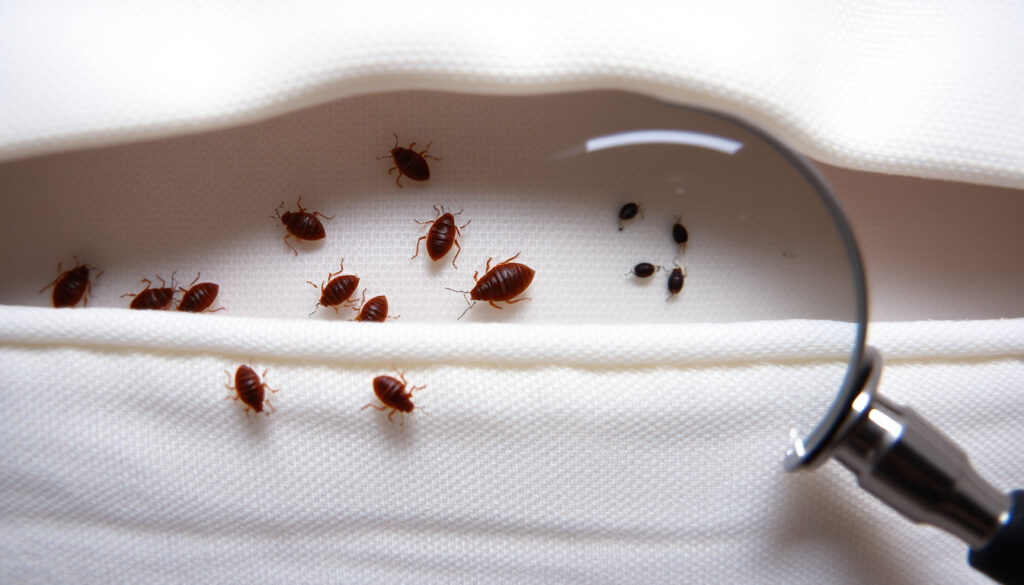
Early Signs of Bed Bugs: How to Detect Infestation Early
You’re lying in bed and feel a sudden itch on your arm. You glance down and see a small red bump—then another one next to it. Before you start worrying, knowing what to look for keeps you ahead of a potential infestation. This guide walks you through the specific physical signs, from blood stains on sheets to dark droppings, so you can spot bed bugs early and act fast.
U.S. households affected annually: 1 in 5 ·
Typical bite reaction time: 2 days to 2 weeks ·
Bed bug lifespan without feeding: up to 1 year ·
Number of eggs laid per day: 1 to 5
Quick snapshot
- Tiny black dots about the size of a period (US EPA)
- Found on mattress seams and furniture (US EPA)
- Itchy red welts in clusters or lines (Mayo Clinic)
- Often appear on arms, neck, and face (Mayo Clinic)
- Pale yellow eggshells (US EPA)
- Exoskeletons left after molting (US EPA)
The snapshot reveals four key indicators that separate a few stray bugs from a growing infestation.
| Label | Value |
|---|---|
| Most common sign | Small blood stains on bedding |
| Infestation confirmation | Live bugs found in mattress seams |
| Bite pattern | Tidy rows or clusters of 3 bites |
| No signs but bites | Possible other pests like fleas or mites |
How do you know if you have bed bugs early?
Three physical clues tell you bed bugs are present before the infestation grows. Each one is easy to spot if you know where to look.
Look for physical signs on your mattress
- Rusty or reddish blood stains on sheets or mattress from crushed bed bugs are a primary early sign according to the US EPA.
- Tiny black dots the size of a period on mattresses indicate bed bug excrement, per the US EPA.
- Pale yellow eggs or eggshells about 1mm in size found near mattress seams signal early infestation, according to the US EPA.
- Shed bed bug skins resembling the bugs themselves are found in mattress folds and seams, reports Harvard Health.
Inspect bedding for blood stains and dark spots
- Small brown spots on bedding or furniture are bedbug feces, states the NHS UK.
- Musty, sweet odor around sleeping area indicates bed bug presence from scent glands, notes Harvard Health.
What does the start of bed bugs feel like?
The physical sensation varies, but the bite pattern is distinct. Understanding what you’re feeling helps separate bed bugs from other skin reactions.
Sensation of crawling on skin
- Bed bugs feed every 5-7 days, excreting digested blood as black fecal spots in groups of 10+ per VDACS Virginia.
- Bites often occur on skin exposed while sleeping—face, neck, arms, and hands, per the Mayo Clinic.
Itchy red welts appear after bites
- Itchy red bites in lines after sleep indicate bed bugs over other pests, according to Fairway Lawns.
- Bites may not appear for up to 14 days, so rely on physical evidence like spots, advises the Texas DSHS.
- Some people show no bite reaction, making physical signs on mattress essential for detection, per the Mayo Clinic.
The implication: if you feel itchy but see no physical signs on your mattress, the cause might be something else entirely.
What can be mistaken for a bed bug?
Several household insects look almost identical to bed bugs. Knowing the difference saves you from treating the wrong pest.
Identify common look-alike bugs
- Bat bugs and swallow bugs are easily confused with bed bugs, says the VDACS Virginia.
- Fecal spots resemble cockroach feces but are confirmed by presence of shed skins and eggs, per VDACS Virginia.
Distinguish bed bugs from carpet beetles and fleas
- Carpet beetles, booklice, and fleas can be mistaken for bed bugs; use size and color differences to confirm, suggests UC IPM.
How do I confirm if I have bed bugs?
Confirmation requires a systematic inspection. Use a flashlight and look in the places bed bugs hide.
Inspect mattress seams and crevices
- Use flashlight and magnifying glass to inspect mattress seams for bugs, spots, and skins, recommends UC IPM.
- Bed bugs hide in mattress seams, box springs, bed frames, and furniture cracks, reports Orkin.
Use a flashlight to check behind headboards
- Check mattress seams, bed frames, and box springs for rusty or reddish stains from crushed bugs, per the US EPA.
- Dark spots (bed bug excrement) confirm presence, according to the US EPA.
Look for shed skins and eggshells
- Tiny pale yellow eggs or eggshells about 1mm in size found near mattress seams signal early infestation, per the US EPA.
- Examine pet bedding for blood spotting, feces, or exoskeletons as signs in animals, suggests Orkin.
What this means: if you find three or more of these signs in one area, you have an infestation that needs treatment.
Can bed bugs live on pillows?
Pillows provide warmth and hiding spots. Knowing where to check keeps them from spreading to your head area.
Signs of bed bugs in pillows
- Bed bugs can hide in pillows, especially seams and folds; check pillow tags and zippers for bugs, per Orkin.
- Dark spots the size of a period on pillowcases indicate bed bug excrement, per the US EPA.
Prevention and removal from pillows
- Wash and dry pillows on high heat to kill bugs; steam cleaners kill bed bugs on contact at 130°F, notes Harvard Health.
What kills bedbugs instantly?
When you find them, you want them gone immediately. These methods work fast.
Heat treatment above 120°F
- Steam cleaners kill bed bugs on contact at 130°F, reports Harvard Health.
- Washing and drying bedding on high heat kills all life stages, per the US EPA.
Diatomaceous earth and steam cleaners
- Diatomaceous earth is a slow-acting killer that dehydrates bugs over days, according to UC IPM.
- Insecticides labeled for bed bugs can kill instantly, but always verify with the US EPA for approved products.
The pattern: steam gives instant results for visible bugs, but only full heat treatment on bedding kills eggs and hidden bugs.
Clarity section
Confirmed facts
- Blood stains and dark droppings are definitive signs (US EPA).
- Bites in rows are a strong indicator (Mayo Clinic).
- Bed bugs hide in mattress seams and furniture cracks (Orkin).
What’s unclear
- Bites alone do not confirm bed bugs.
- Three bites in a row is not always bed bugs.
- Some people show no bite reaction (Mayo Clinic).
Quotes from experts
Finding bed bug signs like rusty stains and dark spots on your mattress is the first step to confirming an infestation. Without physical evidence, you can’t be sure what you’re dealing with.
U.S. Environmental Protection Agency
Bite marks on exposed skin—often on the face, neck, and arms—are a common sign, but they can take up to two weeks to appear. Always check the mattress for droppings and shed skins.
Early detection makes treatment simpler and cheaper. For any homeowner, the choice is clear: inspect your mattress seams and bedding weekly, or risk a full infestation that requires professional fumigation.
Frequently asked questions
Can you have bed bugs and not see any signs?
Yes. Some people show no bite reaction, and early infestations can hide in mattress seams without visible droppings. Physical inspection with a flashlight is the only way to confirm.
How fast do bed bugs multiply?
Female bed bugs lay 1 to 5 eggs per day, and eggs hatch in 6-10 days. A small infestation can become a large one within a few weeks.
Do bed bugs only come out at night?
Bed bugs are primarily nocturnal and feed while you sleep, but hungry bed bugs may come out during the day if no human host is available at night.
Can bed bugs jump?
No. Bed bugs cannot jump or fly—they crawl from hiding spots to their host. This is why they often travel through luggage, clothing, and secondhand furniture.
What scent repels bed bugs?
Lavender and peppermint essential oils are sometimes cited as repellents, but no scientific evidence supports their effectiveness. Heat and approved insecticides are the only proven methods.
Should I throw away my mattress if I have bed bugs?
Not necessarily. Treatment can kill bed bugs on your mattress. Only discard it if the infestation is severe and the mattress is old or damaged. Seal it in a plastic cover before disposal.
Do bed bugs carry disease?
According to the Mayo Clinic, bed bugs are not known to transmit disease, but their bites can cause allergic reactions and secondary skin infections from scratching.
Related reading
More related posts
 Mission: Impossible 2 – Plot, Cast, Ending, Reviews
 Maggie Baugh and Keith Urban: Age, Tour Exit & Rumors Explained
 Layla Jenner: Age, Nationality, Real Name & Kardashian Rumors
 Qualicum Beach Real Estate: Homes for Sale & MLS Guide
 Can You Unsend an Email? Gmail, Outlook Guide
 Cast of Eyes Wide Shut – Actors, Roles and Casting Insights
 BMO Business Online Banking: Login, Register, App Guide
 When Is Easter 2026 – April 5 Date, Good Friday and Facts